

Key Takeaways
- 1 in 5 Australians aged 45+ lives with chronic pain (AIHW, 2024).
- A meta-analysis found ~75% of participants obtained substantial pain relief from hypnotic analgesia (Montgomery et al., International Journal of Clinical and Experimental Hypnosis, 2000).
- Hypnotherapy works by changing how your brain and nervous system respond to pain signals — not by pretending pain isn’t real.
- It’s complementary support. Always work with your health professional for diagnosis and treatment.
One in five Australians aged 45 and over lives with chronic pain (AIHW, 2024). If that’s you, you already know pain isn’t just physical. It affects your sleep, your mood, your confidence, your relationships. You plan your life around it. You brace for flare-ups before they arrive.
At Make Changes NLP & Hypnotherapy, Wendy Gadsby works with people who’ve already been through the medical pathways — scans, specialists, physio, medication — and want additional tools. Hypnotherapy doesn’t replace medical care. It changes how your mind and body respond to what’s happening.
How It Works
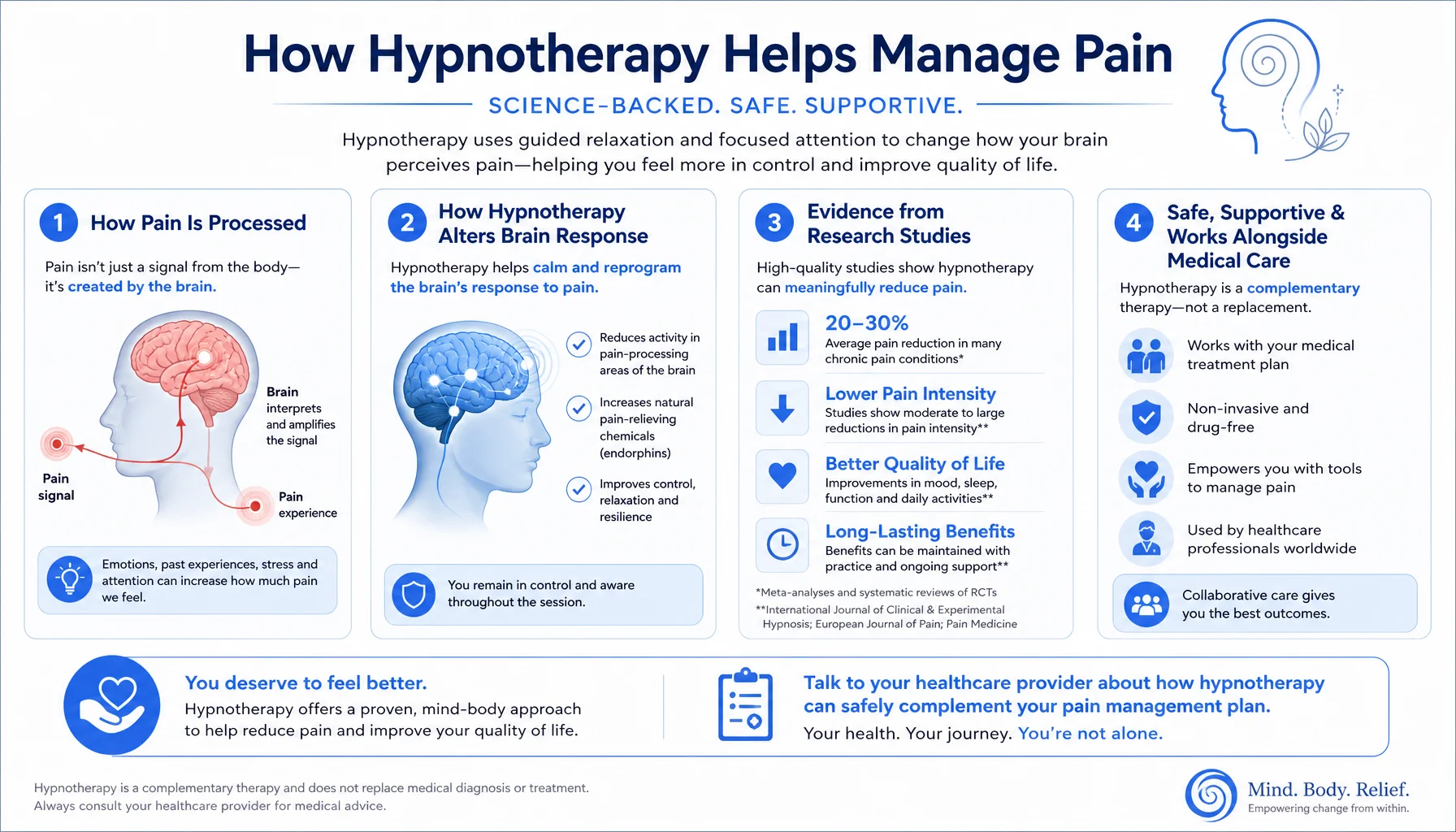
Pain is not a simple signal from damaged tissue. Your brain interprets pain through layers of stress, attention, memory, fear, sleep quality, and past experience. That’s why pain feels worse when you’re exhausted, anxious, or tense. It’s also why calming the nervous system can make a real difference.
Hypnotherapy uses a focused, relaxed state to work with those subconscious patterns. You’re not asleep. You’re not out of control. You’re guided into a state where your attention narrows and your body settles. From that steadier place, you can rehearse new responses — softening tension, dialling down discomfort, recovering faster after flare-ups.
Brain imaging backs this up. Research shows hypnotic suggestion changes activity in brain regions that process pain and emotion (Rainville et al., Science, 1997). This isn’t distraction or positive thinking. It’s engaging real neural networks involved in how pain is experienced.
A meta-analysis by Montgomery, DuHamel and Redd (2000) found that about three quarters of participants obtained substantial relief from hypnotic analgesia. A later review by Jensen and Patterson (American Psychologist, 2014) found hypnosis may reduce pain intensity and improve quality of life in chronic pain. Thompson et al. (Neuroscience and Biobehavioral Reviews, 2019) concluded hypnosis has positive effects across pain conditions and settings.
The honest take: hypnosis can be an effective tool. Results vary. It works best as part of a broader plan with your health professional — not as a replacement for medical assessment.
What to Expect
Your first session starts with understanding your actual experience. What makes the pain worse? What helps? When did it start? What have you already tried? You won’t be asked to prove your pain or justify it.
During hypnosis, you sit comfortably. Eyes closed. Wendy guides you through relaxation. The suggestions are specific — feeling warmth or comfort where there’s tension, imagining a dial you can turn down, creating a cue your body recognises as “settle.”
Between sessions, you practise. Short self-hypnosis routines. A breathing cue when discomfort rises. Noticing early warning signs and responding before pain peaks. These small repeated actions teach your nervous system that calm is possible.
Hypnotherapy sits alongside physiotherapy, psychology, medical care — not instead of it. If your pain is new, severe, unexplained, or changing, see your health professional first.
Frequently Asked Questions
Can hypnotherapy help with chronic pain?
For many people, yes. The research supports it — particularly for changing how you respond to pain, reducing fear around movement, and improving sleep. It doesn’t claim to cure chronic pain or replace medical care.
Will I lose control during hypnosis?
No. You’re aware, you can speak, you can stop anytime. It’s a focused state, not unconsciousness.
How many sessions?
Varies. Some people notice changes quickly. Long-standing or complex pain may need more sessions. Wendy will discuss a realistic plan in your consultation.
Can I use it with other treatments?
Yes. Hypnotherapy complements physio, psychology, and medical care. Always follow your health professional’s guidance.
About the Author
Wendy Gadsby founded Make Changes NLP & Hypnotherapy in Melbourne. Certified Hypnotherapist, NLP Practitioner, and NLP Master Practitioner with over 15 years of experience and 5,000+ clients supported. Her approach is practical, direct, and grounded in real behaviour change.
Medical Disclaimer
This article is for general education only. It is not medical advice. Hypnotherapy may support pain management but does not diagnose, treat, or cure any condition. If you have new, severe, or changing pain, seek guidance from a qualified health professional.