

In Australia, smoking rates have declined significantly over the past two decades. Approximately 14% of Australian adults smoke daily, according to the Australian Institute of Health and Welfare (2020). Despite this progress, quitting smoking remains one of the most challenging behavioural changes a person can make.
Hypnotherapy has emerged as a promising tool to support Australians in this journey. But how does hypnotherapy work for quitting smoking, and what does the science actually say about its effectiveness? This article examines the evidence.
What Happens in the Brain During Hypnotherapy for Smoking Cessation?
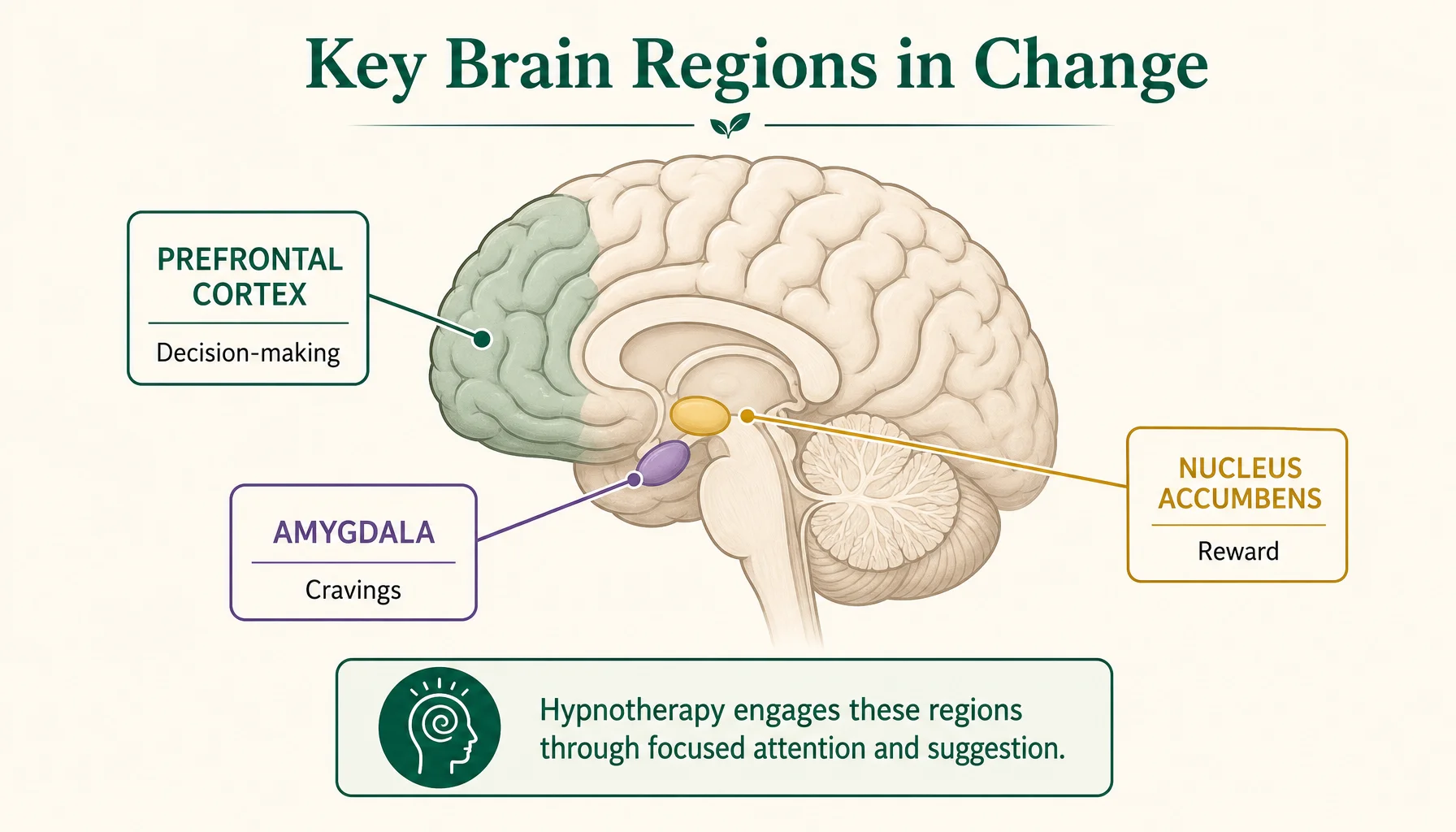
Hypnotherapy engages the brain in ways that may directly influence smoking behaviour. Research using functional magnetic resonance imaging (fMRI) has shown that hypnosis can alter activity in brain regions associated with attention and executive control (Spiegel & Frischholz, Biological Psychiatry, 2008). These areas are essential when you are working to resist cravings and focus on new, healthier goals.
How Attention and Self-Control Are Affected
During a hypnotherapy session, your brain enters a state of heightened focus with reduced peripheral awareness. In this state, therapeutic suggestions may reach your subconscious more readily, helping you build new associations with smoking triggers.
Rather than reaching for a cigarette when you feel stressed, your brain may begin to default to a different response — such as taking three deep breaths or visualising clean, healthy lungs. This is not magic. It is the brain’s neuroplasticity responding to repeated, focused suggestion.
What Does the Research Say About Success Rates?
The effectiveness of hypnotherapy for smoking cessation has been examined in multiple studies. A Cochrane systematic review by Barnes et al. (2010) analysed several randomised controlled trials and found that hypnotherapy can be as effective as other behavioural interventions, though the evidence varies in quality and consistency.
A more recent review by Green and Lynn (2014, Psychology of Addictive Behaviors) compared hypnotherapy to a range of cessation methods and found that it performs similarly to other behavioural approaches. The key takeaway from both reviews: hypnotherapy is a legitimate, evidence-supported option, but success depends on individual factors including motivation, therapist skill, and the number of sessions.
How Does Hypnotherapy Compare to Other Quit Methods?
When choosing a method to stop smoking, it helps to understand how the options compare. The table below provides an evidence-based overview:
| Method | Estimated Success Rate | Key Advantage | Key Limitation |
|---|---|---|---|
| Hypnotherapy | ~25% | Drug-free, addresses subconscious patterns | Results vary; therapist-dependent |
| Nicotine Replacement Therapy (NRT) | ~22% | Reduces physical withdrawal | Does not address psychological addiction |
| Counselling / Behavioural Therapy | ~15% | Builds coping strategies | Time-intensive; requires ongoing commitment |
| Cold Turkey | ~4% | No cost, immediate | Very low success rate; intense withdrawal |
Sources: Cochrane Review (Barnes et al., 2010); Green & Lynn (2014). Success rates are approximate and vary by study design and population.
Combining hypnotherapy with other approaches — such as counselling or nicotine replacement — may improve overall outcomes by addressing both the psychological and physical dimensions of addiction.
What to Expect During a Hypnotherapy Session for Smoking
If you have never experienced hypnotherapy, knowing what to expect can help you feel more comfortable. Here is a typical session structure at Make Changes NLP & Hypnotherapy:
- Initial consultation. Wendy will discuss your smoking history, motivations for quitting, and any previous attempts. This helps tailor the session to your unique needs. Book a free consultation here.
- Induction phase. You are guided into a deeply relaxed state — similar to daydreaming — using breathing exercises and visualisation techniques. Your conscious mind quietens, preparing your subconscious for suggestion.
- Suggestion phase. While you are relaxed, positive suggestions are introduced. You may be encouraged to visualise a smoke-free future, associate smoking with discomfort, or imagine healthy, clear lungs.
- Cognitive restructuring. The hypnotherapist helps reprogram subconscious thought patterns. Urges to smoke are replaced with healthier responses — deep breathing, a sip of water, or a moment of mindfulness.
- Reinforcement and awakening. The session concludes with reinforcement of the positive suggestions and a gentle return to full awareness. Most clients report feeling calm, clear-headed, and empowered.
Some people notice significant changes after just one or two sessions. Others benefit from ongoing support. Wendy will work with you to develop a personalised plan based on your progress.
Frequently Asked Questions
Is hypnotherapy safe?
Yes. Hypnotherapy is non-invasive and drug-free. When conducted by a certified professional like Wendy Gadsby — who has over 15 years of clinical experience — it is considered a safe complementary approach. Unlike some treatments, there are no chemical side effects.
How many sessions will I need?
The number varies by individual. Some clients experience a shift after one session. Others choose a programme of 2-4 sessions for deeper reinforcement. Your hypnotherapist will discuss a plan based on your goals and responsiveness.
Can hypnotherapy guarantee I will quit smoking?
No ethical practitioner can guarantee results. Hypnotherapy is not a magic switch — it is a tool that works with your motivation and commitment. What the research suggests is that when you are genuinely ready to quit, hypnotherapy significantly improves your odds compared to willpower alone.
What if I am sceptical about being hypnotised?
Belief is not a prerequisite. A willingness to engage with the process is far more important than whether you “believe in” hypnosis. The hypnotherapist guides you into relaxation and suggestibility regardless of your starting mindset. Many sceptical clients have been surprised by their results.
How do I find a qualified hypnotherapist in Melbourne?
Look for a practitioner with recognised certification, substantial clinical experience, and a track record of client results. At Make Changes NLP & Hypnotherapy, Wendy Gadsby has helped over 5,000 Australians across two Melbourne locations (Sunshine and Burnside Heights) as well as online Australia-wide. Learn more about Wendy’s qualifications here.
About the Author
Wendy Gadsby is a Certified Hypnotherapist and NLP Practitioner with over 15 years of experience. She has helped more than 5,000 clients across Melbourne and Australia-wide, specialising in smoking cessation, weight management, and stress reduction. Wendy practices from two Melbourne locations and offers secure online sessions via Zoom and Microsoft Teams.
Explore our quit smoking services →
This article is for informational purposes only and does not constitute medical advice. It is not a substitute for professional diagnosis or treatment. Always seek the advice of a qualified health professional with any questions you may have regarding a medical condition.